Emmanuel Claude
What is this challenge about?
In this challenge, two contestants compete against each other to balance as many objects as possible on a tiny surface. The task sounds simple, but it’s a real balancing act: a 20 × 15 cm wooden board is placed on a speaker stand — and the stand itself may not be touched by the objects. In total, 169 items are available.
The contestants have 10 minutes to build their structure. There’s a special twist:
- In the first 5 minutes, no object may be placed on the board and the board may not be touched. This time is meant for preparing the objects to be placed (for example, connecting them together or filling them).
- In the last 5 minutes, the teams may place and stack the objects.
After time runs out, the structure must remain stable for 10 seconds. If objects fall during this time, they do not count.
Stack as many objects as possible on a small surface — without them falling off!
Materials & Setting:
- Approx. 20 × 15 cm wooden board as the supporting surface (this could also be a stool or the edge of a table)
- 169 different objects! (Or as many as you can find at home.) Be creative: you can use hollow objects, small ones, large ones, heavy ones, light ones… and don’t forget clothes hangers!
Rules:
- Objects may extend beyond the board but must not touch the stand.
- The items must not be damaged (exception: natural modifications, e.g., folding paper).
- Objects may be taken apart and reassembled but still count as one object. For example, a pen may be separated into two parts (pen and cap), but both parts must be placed for it to count as one object.
- After time is up, the structure must remain stable for 10 seconds.
Infobox
The key idea is to create stable equilibrium positions, especially for objects that are naturally unstable (e.g., balls or round shapes). These must be secured between or inside other objects so they don’t roll or tip over.
When stacking, keep in mind:
- The sum of torques (moments of force) around the tipping point must be zero so that the structure does not tip over. (See explanation below.)
- Keep the center of mass as low as possible. (See explanation below.)
- Build a wide, stable base: place lighter objects higher up.
- Objects can also hang over the edge of the surface, for example using clothes hangers. (See explanation below.)
- It is crucial that the center of mass of any object cannot shift once it has been placed (which could happen if a marble rolls around inside a box).
- If the center of mass shifts too far outward, a tipping moment is created, and the structure will fall over.
What do you need to know to solve this challenge?
This challenge is based on fundamental principles of statics and mechanics. The key concepts are:
- Center of Mass: The center of mass is the point at which the mass of an object or structure can be considered to be concentrated. For an upright person, the center of mass is located roughly around the level of the belly button, and as long as this point remains above the area covered by the feet, the person stays balanced. However, if the center of mass moves outside this base of support, the structure tips over. The lower the center of mass, the greater the stability. The center of mass can even lie below the supporting surface! That’s why building a wide base with heavy objects at the bottom is a key design principle.

Here you can see how Melody Funck and Micas Carvalho solved this challenge!
Why don’t cable car cabins tip over?
Cable car cabins hang freely from a pendulum-style suspension beneath the support cable. This means that the center of mass of the cabin (including passengers) lies below the suspension point. As a result, the system is self-stabilizing.
When the center of mass is below the pivot point, gravity acts as a restoring force. In practical terms: if the cabin is deflected by wind or while going around a curve, a torque is created that brings it back to the vertical position. The movable suspension allows slight swinging, but prevents permanent tipping.
If the load is unevenly distributed, the weight shifts to one side, and so does the center of mass. As long as it remains below the suspension point, the cabin will not tip over. It may swing briefly, but it will right itself again.
When balancing 169 objects, the same principle applies: the goal is to keep the center of mass low — or even below the base area. Only then does the structure remain stable. Just like a gondola.
Would you like to see how many objects the contestants in the show were able to balance? Then watch the episode!
The episode airs on the 27th of February
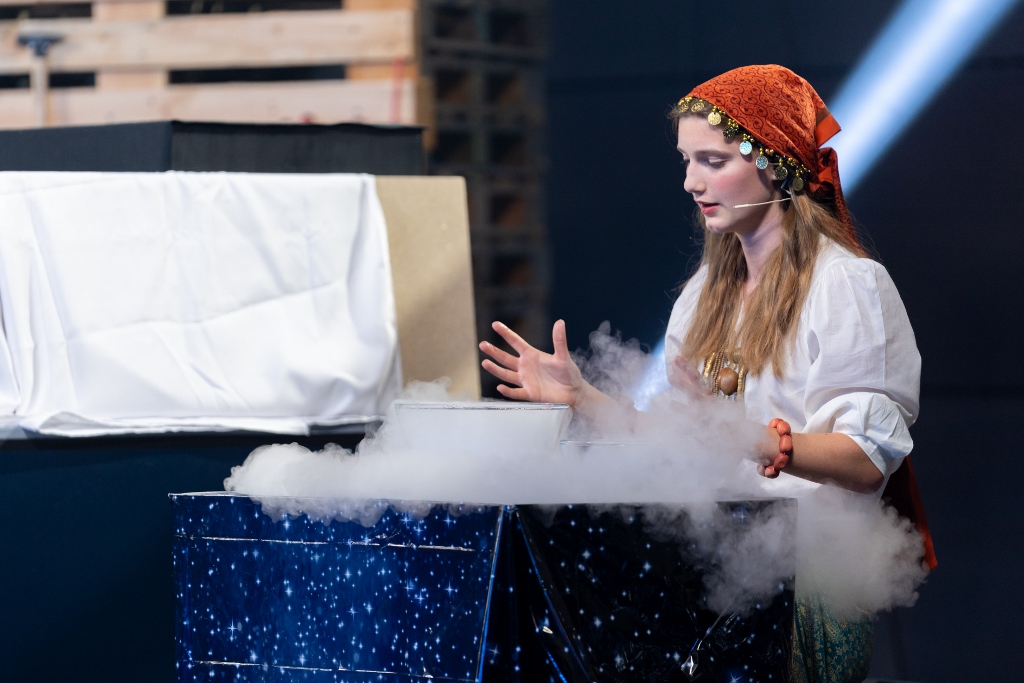
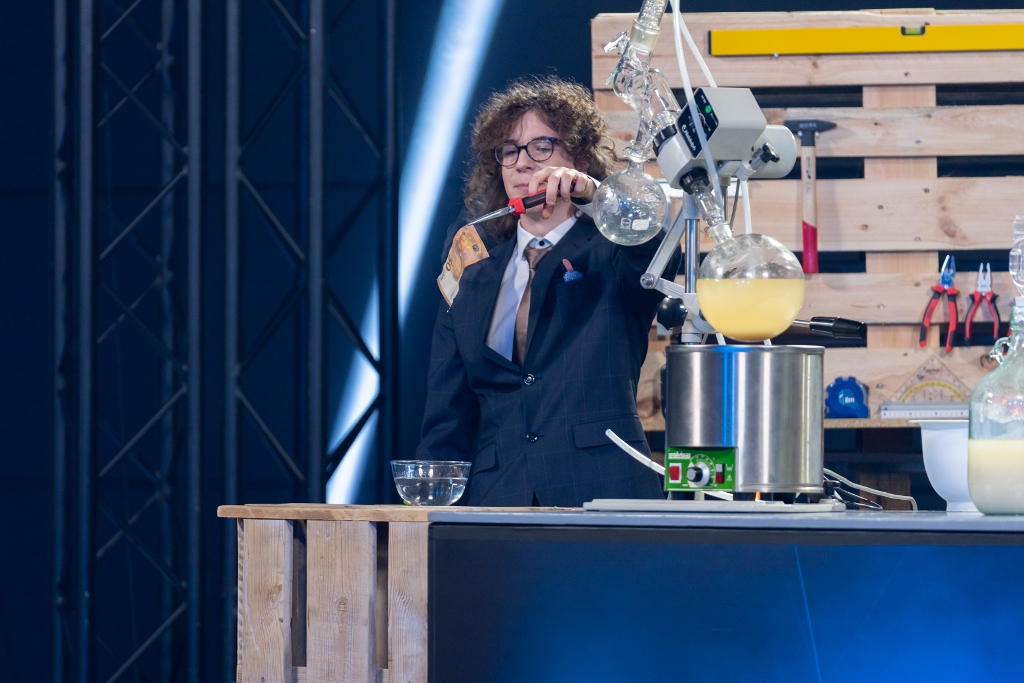
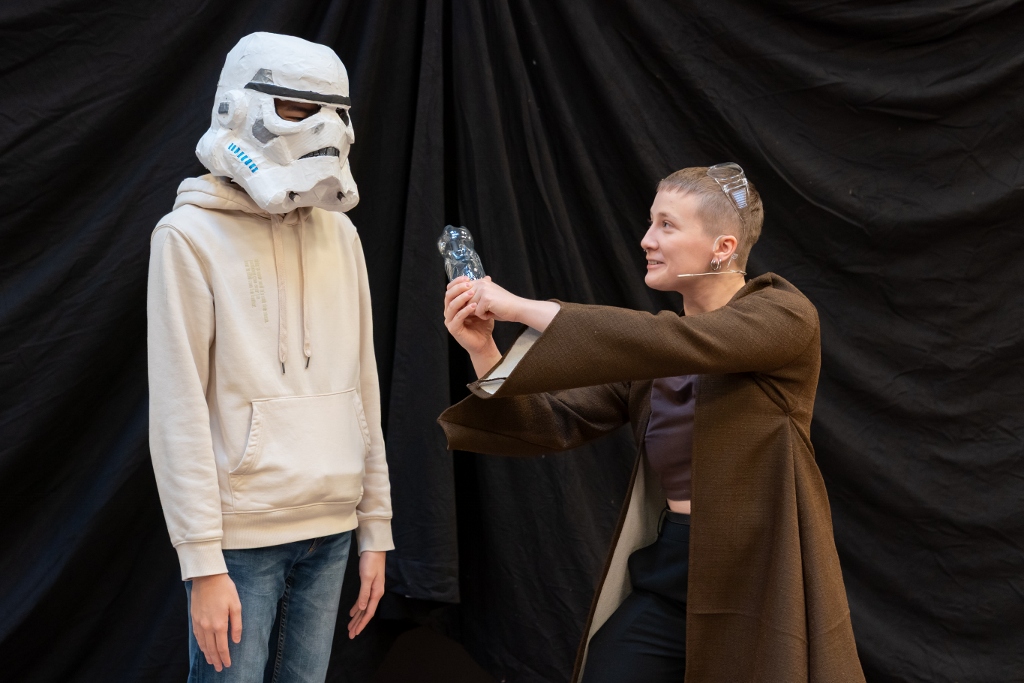
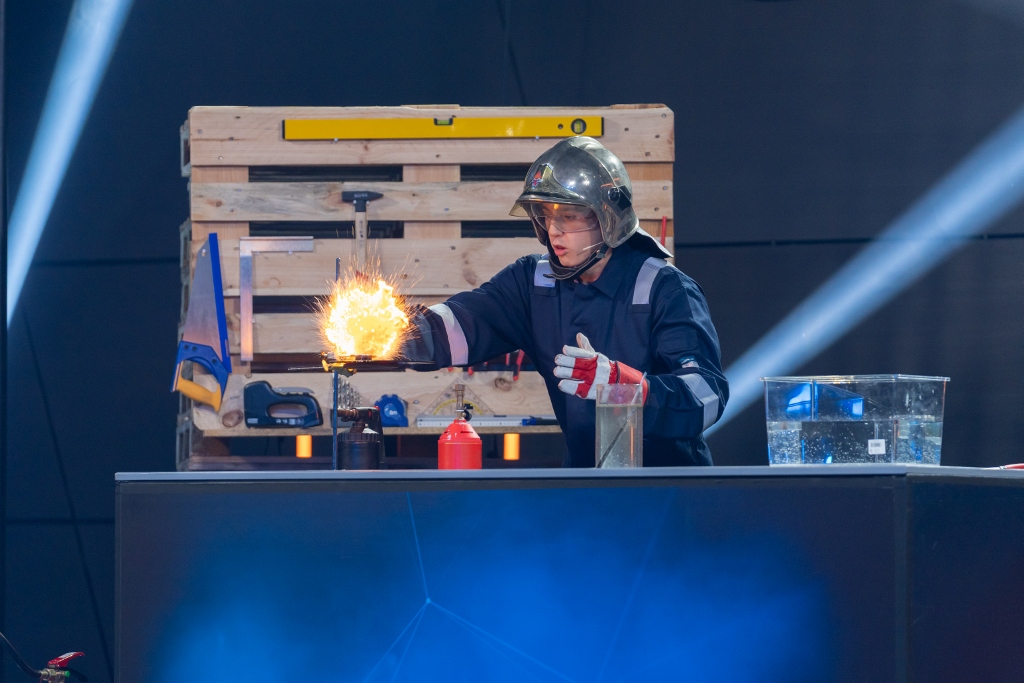
A few highlights from Episode 8


Author: Diane Bertel
Editor: Lucie Zeches (FNR)
Photos: Emmanuel Claude