Emmanuel Claude
Are you a teacher currently covering the topic of DNA in your class? Then challenge your students with this Take Off Challenge.
What is this challenge about?
In this challenge, the candidates were given two large-scale 3D models of the same DNA sequence: one from a healthy cell and one from a tumor cell. Their task was to systematically compare the two models, identify differences in the color-coded sequence of bases (A, T, G, C – see explanation below), and then correctly name the crucial (significant) mutation(s). In other words, they had to determine which of these changes actually had an effect on the resulting amino acid sequence.
Infobox
An amino acid is the basic building block of proteins. The amino acid sequence is the exact order of these building blocks in a protein, which determines how it folds and what function it performs in the body.
Here is all the information your students need:
To solve this challenge, students need a certain amount of basic knowledge. This information was also provided to the candidates in the show.
What is DNA?
DNA (deoxyribonucleic acid) is the molecule that stores the complete genetic information of an organism. It contains the blueprint for all proteins and therefore controls the development, function, and reproduction of cells. DNA can be found in almost all cells: in humans and animals mainly in the cell nucleus, but also in the mitochondria.
DNA is structured like a twisted ladder, known as the double helix. It consists of two long strands made up of many building blocks called nucleotides. These nucleotides contain a variable component: the bases. There are four of them: adenine (A), thymine (T), cytosine (C), and guanine (G).
A always pairs with T, and C always pairs with G.
How do you read a DNA strand?
The strand that carries the information for producing a protein is called the sense strand. It is read from 5′ to 3′.
The genetic code is read in groups of three. This means that the cell reads the DNA base sequence three bases at a time. Each group of three bases is called a codon, and each codon corresponds to one amino acid. For example: AUG – GCU – AAC …
Each codon is then translated sequentially, producing a chain of amino acids (that is, a protein).
What happens in this challenge?
In this challenge, you will analyze 24 bases in total - that is 8 codons, which code for 8 amino acids.
Once you have identified all differences in the base sequence between the healthy cell and the tumor cell, use the codon wheel (see download links below). This allows each codon to be translated into the corresponding amino acid.
Start in the center of the wheel and move outward according to the three bases of the codon. The corresponding amino acid can be found in the outermost circle, represented by a single letter.
Important to know
Not every mutation automatically leads to a different amino acid! The genetic code is redundant. For example, GCA and GCG both code for alanine (A). A change in the third base can therefore have no effect.
If you find a mutation that actually results in a different amino acid, write down: Position number of the amino acid + one-letter code of the new amino acid in the tumor cell (example: 6H).
You can print the image of the DNA strands to be analyzed here:
Here you can print the table where you can write down the amino acids you identify:
Infobox
Healthy cell – sense sequence (8 codons):
|
Position |
DNA |
Amino acid |
|
1 |
ATA |
I |
|
2 |
CGA |
R |
|
3 |
TGC |
C |
|
4 |
AAG |
K |
|
5 |
CTG |
L |
|
6 |
GAC |
D |
|
7 |
TGC |
C |
|
8 |
CAT |
H |
Cancer cell – altered sequence:
|
Position |
DNA |
Amino acid |
|
1 |
ATA |
I |
|
2 |
CGC |
R |
|
3 |
TGC |
C |
|
4 |
AAG |
K |
|
5 |
CTT |
L |
|
6 |
GAG |
E |
|
7 |
TGC |
C |
|
8 |
CAT |
H |
There are three base changes (positions 2, 5, and 6). However, only one of them (position 6) results in a different amino acid:
-
GAC → D (aspartic acid)
-
GAG → E (glutamic acid)
⇒ The only correct answer is therefore 6E.
What do these mutations have to do with the development of a tumor?
Proteins are the workhorses of your body. They control almost all biological processes, from metabolism and cell division to signal transmission. Their function depends strongly on their three-dimensional structure, which in turn is determined by the sequence of amino acids.
If a mutation occurs (that is, a change in the base sequence), the amino acid sequence can change as well. Even a single substitution can alter the structure of a protein and impair its function.
When such mutations accumulate, they can lead to diseases - including cancer. Tumor cells often arise because certain proteins no longer function properly due to mutations.
In modern cancer medicine, the DNA of tumors is sequenced for many types of cancer in order to use targeted drugs that are specifically tailored to the mutation present. Instead of “one therapy for everyone,” medicine is increasingly moving toward personalized medicine. Some drugs only work when a specific mutation is present; if that mutation is absent, the drug has no effect.
Would you like to see how the participants in the show solved this challenge? Then watch the episode:
(The video will appear on March 20, 2026.)
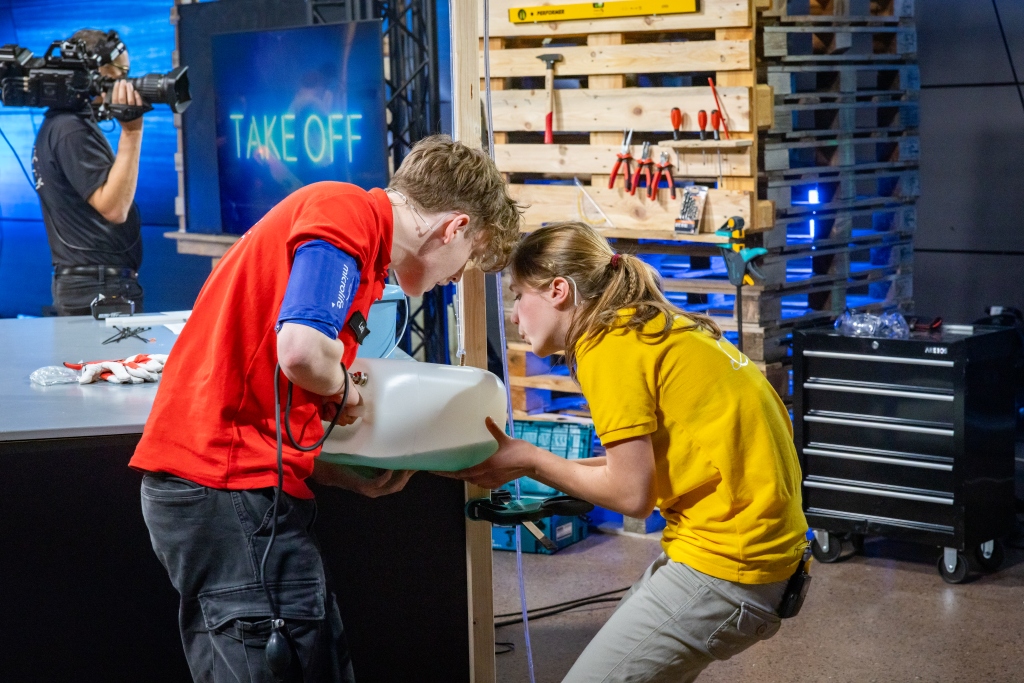
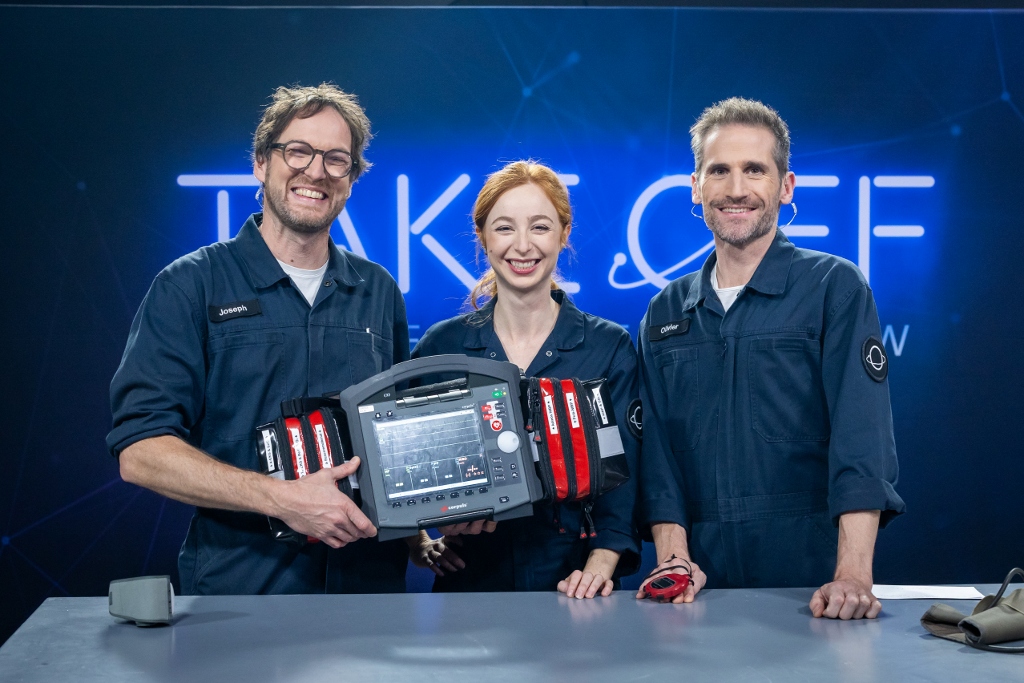
A few impressions from Episode 11:





Author: Diane Bertel
Editor: Lucie Zeches (FNR)
Photographer: Emmanuel Claude

Die Ausarbeitung dieser Rubrik wurde von science.lu in Kooperation mit dem Script (Service de Coordination de la Recherche et de l´Innovation pédagogiques et technologiques) durchgeführt.