


Emmanuel Claude
What is Braille and what is this challenge about?
Braille was invented in 1824 by the French blind man Louis Braille and enables blind people to read and write using raised dots that can be felt by touch. It is based on a system of six to eight dots (arranged in two columns), which Braille developed further from a military code. This results in a highly precise system with 2⁸ = 256 possible dot combinations.
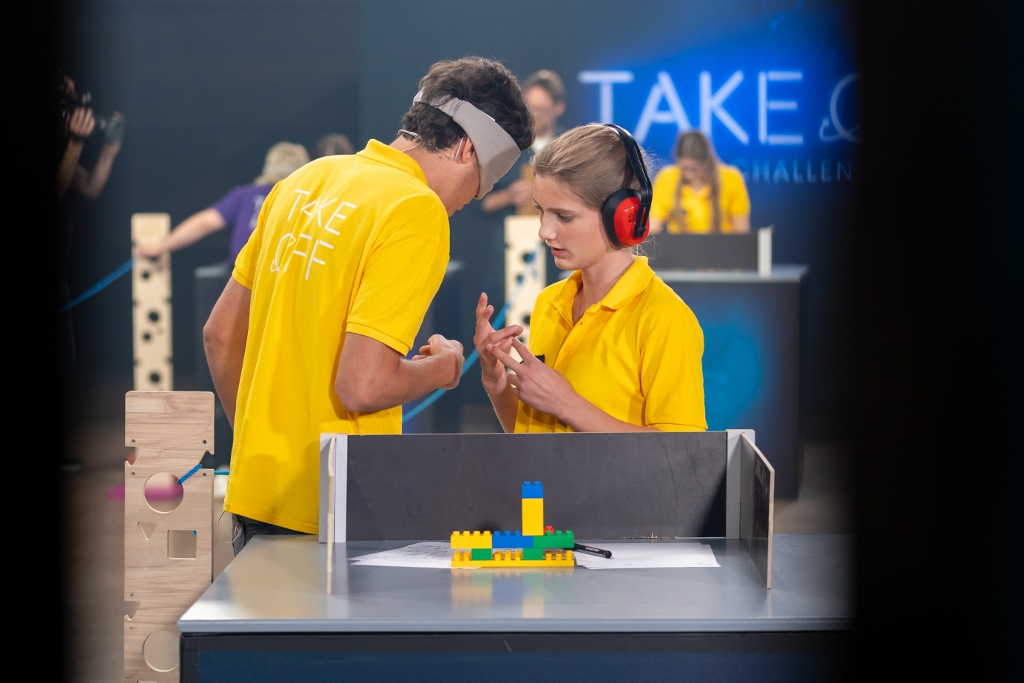
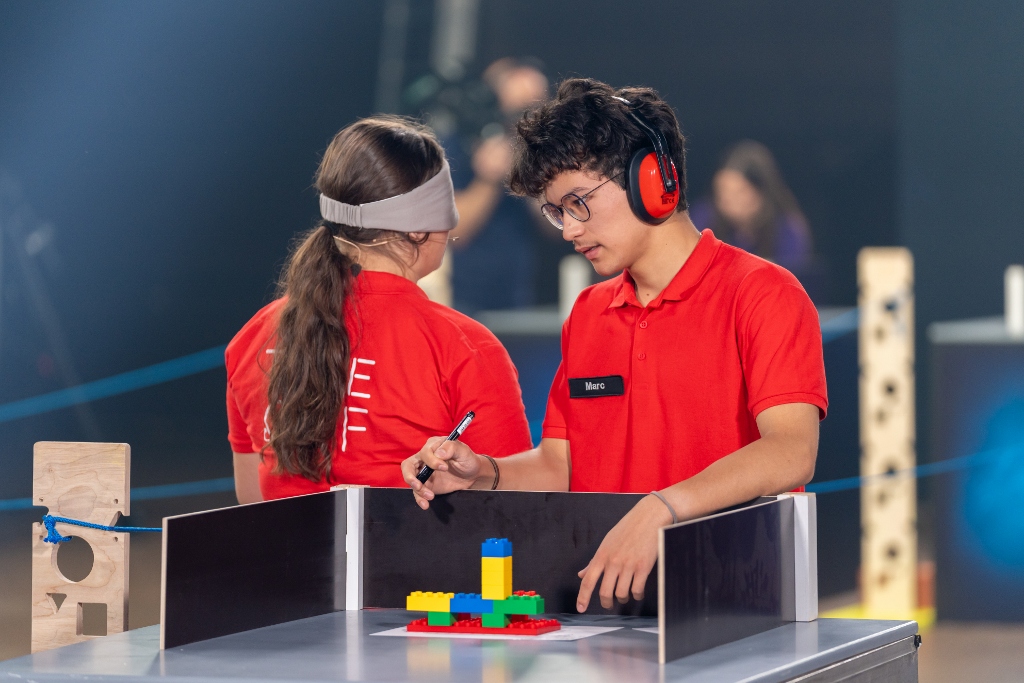
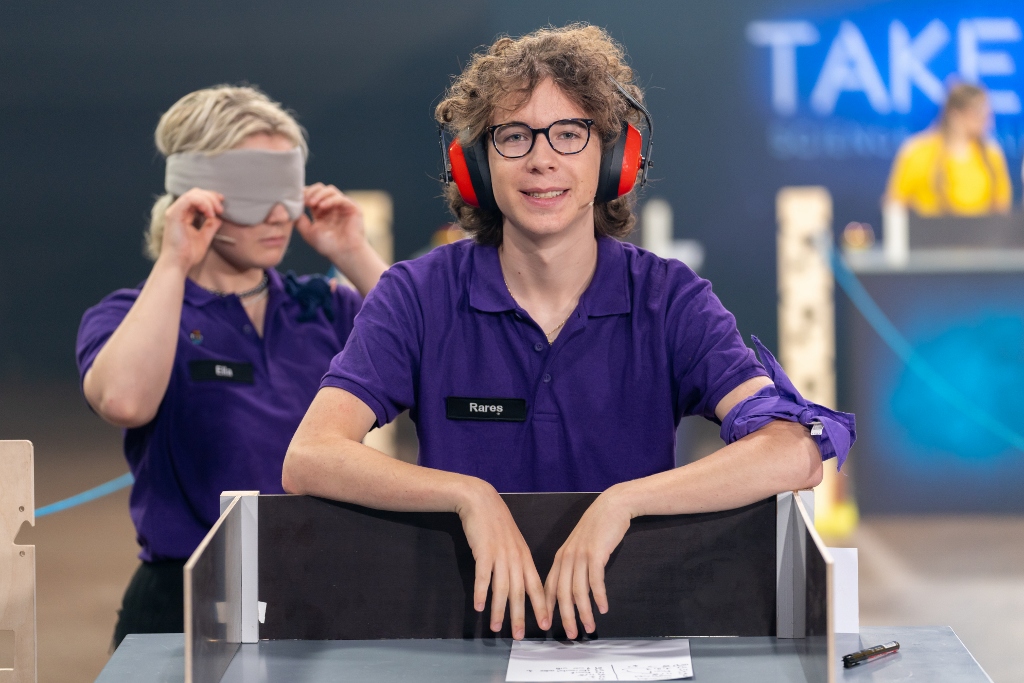
In the Braille Challenge, the candidates immerse themselves in the world of tactile reading. Two participants compete against each other and must solve an identical puzzle hidden in Braille. To do so, they place their hands inside a closed black box and feel the wooden pegs that form the Braille text. Only once they have correctly decoded the code can they solve the puzzle.


The challenge requires maximum concentration, precise finger dexterity, and a strong sense for patterns. Whoever reads the message correctly the fastest and writes the answer to the puzzle in Braille wins.
Want to try the challenge yourself?
Here’s a mini challenge to test yourself: “Find the secret word.”

Can you decipher the word using the Braille Alphabet?
If you want to make it more challenging, you can print out the following image:

This is the same word, just mirrored. Place the paper on a soft surface (e.g., a stack of paper). Now you can press all the dots into the paper using a pen with a hard tip. Turn the paper over and try to feel the indentations with your fingertips.
Really difficult, isn’t it?
Infobox
The word in Braille is “senses.”
Why is it so difficult for sighted people to read Braille?
Why does Braille work?
The process of reading Braille relies on the sensitivity of the fingertips to recognize dot patterns. Our fingertips are among the most sensitive areas of the body. They have an extremely high density of tactile receptors, which can distinguish even the finest surface structures. This sensitivity makes it possible to detect minimal differences - the fundamental requirement for tactile reading.
How fast is Braille?
Experienced Braille readers can reach about 100–120 words per minute. For comparison, visual reading is around 200–300 words per minute.
What happens in the brain?
In people who are blind or lost their sight early, the brain adapts. The visual cortex takes over the task of touch recognition. The brain area normally responsible for vision then processes tactile input. This is an impressive example of neuroplasticity - the brain’s ability to reorganize itself and take on new functions.
Infobox
A classic phenomenon in sensory physiology is two-point discrimination (also called the two-point threshold). This can be easily demonstrated with the two-point discrimination test, which uses a compass or two pointed objects: when two compass points are placed on the skin simultaneously, depending on the body area, you may perceive two separate touches or feel them as a single touch. The smallest distance at which the two points can still be recognized as separate is called the two-point threshold.
The density of tactile receptors in the palms and fingertips is very high; there are many mechanoreceptors. This allows two points to be perceived as separate even at a very small distance. On the back, thighs, or upper arms, however, there are significantly fewer receptors. At these areas, two points are often perceived as one, even when they are farther apart.
What does this mean concretely? For the tip of the tongue, fingertips, and lips, the two-point threshold (i.e., the distance between the compass points) is the smallest, around 1–3 mm. It is largest on the back, thighs, and upper arms, about 50–100 mm. If the two-point threshold is abnormally high, this indicates a sensory impairment.
In addition, there are differences in how the brain processes tactile information depending on the body region (specifically in the somatosensory cortex): body parts like the hands and lips occupy a disproportionately large area in the brain, whereas the back has comparatively little “processing capacity.”
Conclusion: The two-point discrimination test vividly demonstrates that our sense of touch varies in spatial resolution across different parts of the body.
-
After a stroke, patients can regain lost abilities through training. Undamaged brain regions take over functions of the damaged areas.
-
People who have lost a limb can still feel pain in the missing extremity. However, therapies like the mirror box can help the brain relearn.
-
London taxi drivers who pass the famous “The Knowledge” exam show denser neural structures in the hippocampus (the center for spatial memory).
-
Violin players develop a larger representation in the brain region controlling the left hand. Years of practice make finger movements finer, faster, and more precise: the brain forms new synapses.
If you want to see the puzzle the contestants had in the show, then look here:
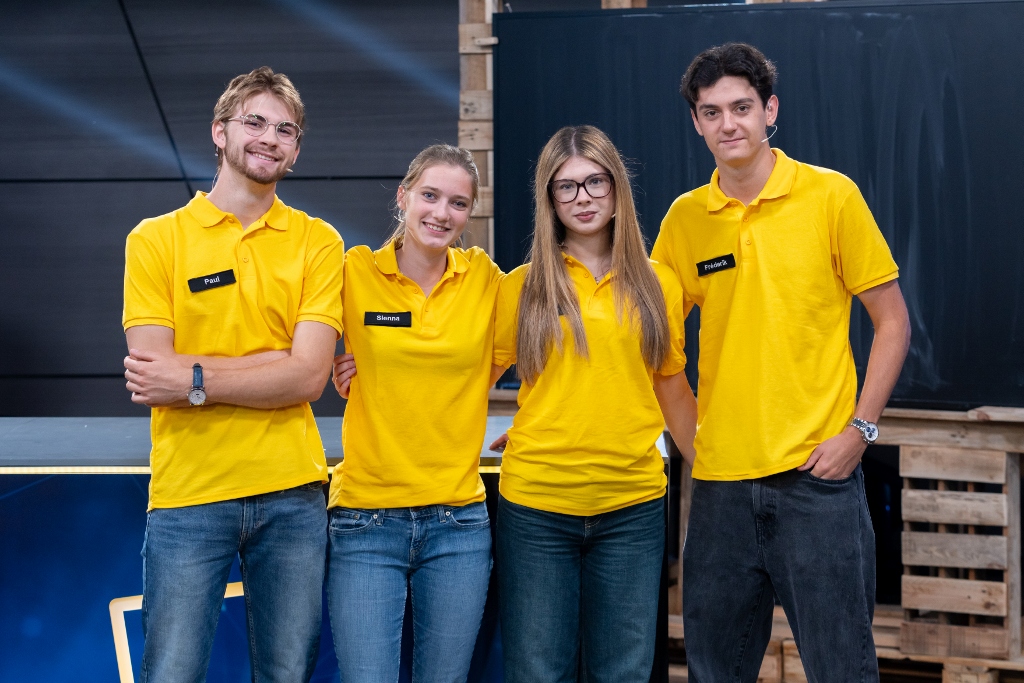
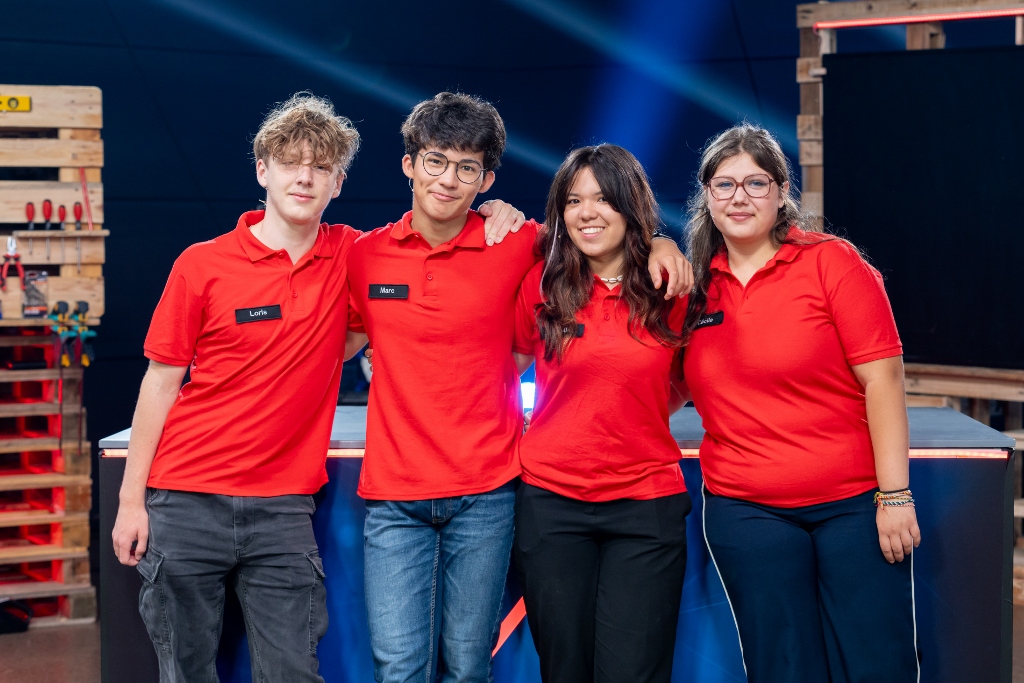
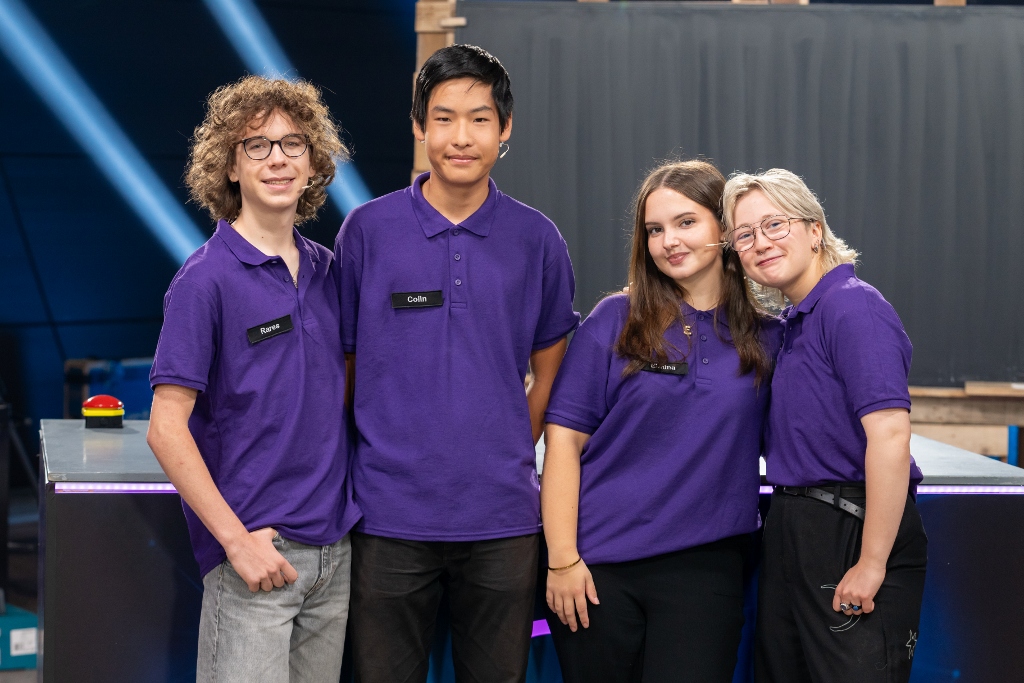
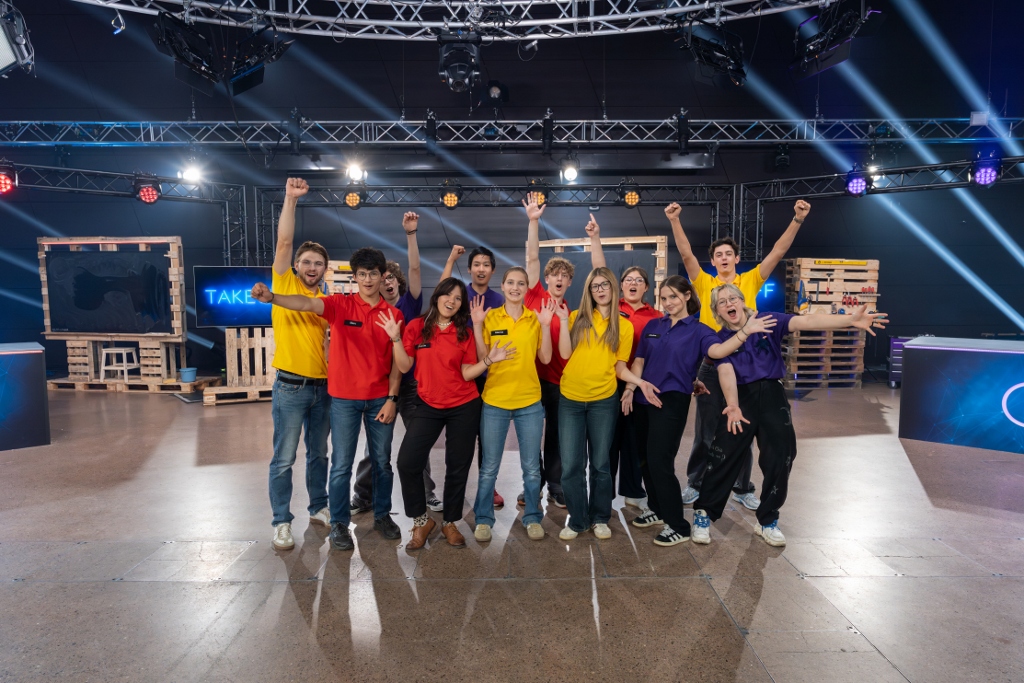
A few impressions from the first studio episode
Author: Diane Bertel
Editors: Lucie Zeches (FNR) & Joseph Rodesch (FNR)
Fotos: Emmanuel Claude